Spiral came on board as the software partner of choice for the TAME trial over five years ago.
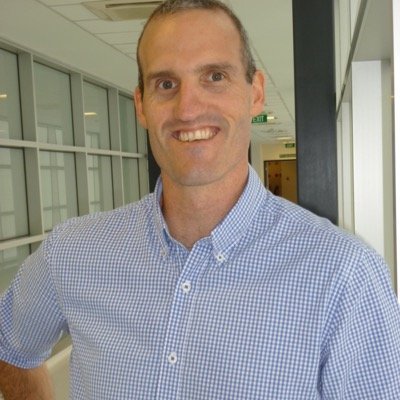
Since then, we've supported the team to take their multicentre randomised control trial to 63 sites in 17 countries. We speak with Dr Glenn Eastwood, TAME Chief Principal Investigator, about the study and how Spiral has enabled them to produce a database they can be confident in. Alongside TAME, Dr Eastwood is a Senior Research Fellow at the Australia New Zealand Intensive Care Research Centre within Monash University.
The TAME trial study compares the targeting of normal arterial carbon dioxide levels to slightly higher than normal carbon dioxide levels for 24 hours in patients admitted to the ICU following cardiac arrest in the community. The research seeks to discover if leveraging off the neuroprotective anti-inflammatory and increasing blood flow effects of having slightly higher carbon dioxide levels in the blood improves the neurological outcome of patients who survive to six months.
Design thinking that embeds multiple comparative data.
Spiral's software has allowed him to have confidence in the quality of the wealth of information collected in the TAME trial, as the layout and structure of the software makes it so user-friendly.
"As a Research Manager and Coordinator at Austin Hospital, I had been a user of the Spiral data management system for previous trials and felt supported by their team. I was impressed with its user-friendliness and good layout, so when it came time for me to choose a trial platform for TAME to run on, I immediately put forward Spiral. I was confident they could expand into other countries with us."
This study was also unique because it was a harmonised trial embedded in a two by two factorial design. Under serendipitous timing, the TTM2 trials were looking for funding simultaneously as us but were looking at temperature management for patients after cardiac arrest. By embedding one trial database and one case report form, the Spiral platform allows sites to do one or both trials, allowing both trials better access and site leverage.
The final participants were recruited in September 2021, and their 6-month follow-ups with trial participants were completed in February, aligned with their initial projections of completion all those years ago.
Whilst the pandemic could have been a spanner in the works, as different countries came on board at various stages, certain sites could enrol patients when others were not, and vice versa. Now, the team are focused on getting all their data into Spinnaker, and we eagerly await the study's findings, which are expected to be released later this year.
Ensuring that each of the 65 sites taking part in the trial had a good user experience was essential to this study. Dr Eastwood acknowledges this is one of Spiral's greatest strengths, with the software applying common sense with logical and chronological tabs and inputs.
He also notes that the design's attention to detail provided exceptional ease of use, as he could source the correct information quickly and accurately.
"The database field has a prefix that corresponds with the case report form, and that abbreviation is so important for investigators because I want easy access to that variable on that particular row of that table in a paper. Details like that were a blessing."
This attention to detail extends further, allowing for the use of different units of measurement. Some sites this trial was running at used millimetres of mercury as a unit of measure, and others used kilopascals. Ensuring that clinicians were able to input their data in a way that made sense to them meant that the users didn't have to do more calculations than necessary, and the database took care of the rest.
"No matter where you were, you're able to tailor the data coming into the database to suit the site."
Dr Eastwood acknowledges the ease of working with the Spiral team, which allows him to focus on his area of expertise. Not only has he found the software reliable and built for purpose, but the simple contract for build and clear monthly maintenance fee have been helpful and reassuring when budgeting research funding.
Motivated by human compassion.
This research has been ten years in the making, and it's easy to see that Dr Eastwood's motivation is human compassion. He sees his role as nudging care, little by little, to make improvements in patient outcomes and wants people to be able to hug their kids and enjoy a new part of their life that they might not get otherwise.
He acknowledges that the Spinnaker database allows them to record information to make it easy to turn it into clinical language for their clinicians. This is one of the ways that this study has had participation across so many sites with ease.
Moving into the future, data security and data protection are amongst the top priorities of policymakers, particularly in the countries where TAME has operated. Dr Eastwood is grateful for Audrey and the Spiral team's assistance in answering the questions about the Spiral software, with a clear understanding of the ins and outs of their data processes and policy adherence. He acknowledges that systems like Spiral's that are clear on these requirements will become more important as the research community continues to evolve in a connected world.
"Spiral provides a monthly update about the security, the firewall and the system had rarely had any downtime which was reassuring as the trial all around the world and the clinicians taking part needed access around the clock."
"Products that help facilitate clinical research, like Spinnaker, are just going to get more and more important because there's so much data out there and so much opportunity to bring this data together to help create better patient outcomes. I've seen Spiral's flexibility and adaptability and am excited to see how they evolve."
REMAP-CAP, the Randomised, Embedded, Multi-factorial, Adaptive Platform Trial for Community-Acquired Pneumonia, has recently hit a significant date in its trial history, celebrating two years since the first Covid-19 ICU patient was randomised into the trial.
Looking back on the trial and the COVID-19 climate which we still find ourselves in, it’s incredible to see how quickly things happened. On the 10th of March 2020, the first patient was enrolled at Royal Melbourne Hospital, with the second following on the 13th of March. On the 17th we saw another 4 patients enrol before the floodgates opened.
Now two years on since the first enrolment, we have watched as the total number of patients has climbed to an astounding 11,032 with almost 20,000 randomisations. 17,581 of these were with suspected or proven Covid-19. There are now 357 active sites across the globe working within this trial and 55 current or completed interventions in 16 domains.
Before Covid-19 first made itself known, the world of clinical trials was at a remarkably different place. The challenges that existed then are still present now, but the global pandemic has highlighted just how easily health risks can cross borders. We’ve also witnessed the speed at which things can change, demonstrating a need for global cooperation and unity within the medical community. This pandemic has mobilised researchers worldwide on a scale and timeframe that has never before been witnessed for one disease.
The immense pressure that has been placed upon researchers, regulators, trial technicians, doctors and nurses (the list goes on) has been undeniable. We’ve seen how important well-designed randomised clinical trials are for both patients and medical staff as well as a need to move quickly in a time of incredible uncertainty.
Spiral has been involved in the REMAP-CAP clinical trial for the past two years. We have dedicated several members of staff to developing and delivering the software needed to perform this study within our Spinnaker platform. Being highly adaptable and flexible in this current global environment has been a crucial aspect for our team, ensuring that we deliver exactly what is needed to those working on the frontline, making trials like REMAP-CAP faster, easier and smarter.
To put it simply, worldwide, REMAP-CAP has been one of the most important critical care trials of the pandemic, one that Spiral continues to be proud to be a part of.
‘It’s an absolute privilege to be working on this project with the global REMAP-CAP family. The past two years have been crazy - although we were preparing the platform for a pandemic nothing prepared us for the global nature of this pandemic, the speed of its spread or how often the disease adapted. The dedication of the team at Spiral to meet these challenges has been astounding’ - Audrey Shearer, Spiral Founder and CEO
There's been some changes at Spiral that you might be interested in. Three months ago I set a new course for Spiral. Reflecting on progress so far I can say this has been one of the best course changes ever. At times it's been hard, challenging and downright sad, yet I have always felt the wind was on my back and we were doing the right thing.
If you compare this course change to that which you might undertake if you decide you want a toned bod' and you may need to shed some weight, have regular workouts, and eat properly. Then with Spiral I saw we needed to do the same we:
shed some weight and left our Petone office
stopped eating "junk food" or websites. Website's were a short-term cash-flow satisfiers and often left us with the feeling that we could have done better but there wasn't the time
"beefed up" on our software development and are now at the top of the .NET game (well Cain is!)
There are 4 of us in the team and we are all working from home. Audrey Shearer and Alan Watson in Wellington, Cain Harland in Napier, Maureen Hines in England and the services of 3 outside contractors in Wellington when we need them. A newly implemented virtual telephony system means that you can continue to call the same number to contact us 04 5862686. You'll find the new system lets you choose who to talk to … or call me (Audrey) on my mobile.
We've been very busy working on delivering projects including a major project to an Australian client. Another project from the Medical Research Institute of New Zealand, for another ICU clinical trial, is in full swing. Medical trial software has become an important growth area for us and a significant portion of our revenue.
Graphical website design is no longer part of our core business and we will work with graphic designers on larger projects. Our functional design skills have been extended and this feeds back into the software we are developing for businesses and organisations needing database-web integration.
We continue to look after our existing clients and will continue to provide agency type services through partnerships with other businesses and local contractors.
After months of development, we're preparing for the roll out of our innovative software system in one of the most ambitious clinical trials to be undertaken in Australasia.
Involving over 700 patients across 22 Intensive Care Units in Australia and New Zealand, the HEAT Trial focuses on the effect of paracetamol on critically ill patients with known or suspected infection.
Co-ordinated by the Medical Research Institute of New Zealand, in collaboration with the Australian and New Zealand Clinical Trials Group, the trial begins on 15 June, and as Chief Investigator and Intensive Care Specialist, Dr Paul Young points out, relies heavily on having effective IT systems. “At each of the 22 ICUs involved in the study there will be at least 100 staff involved, which means a total of over 2000 staff contributing, so our IT systems need to be very intuitive and Spiral has delivered just that.”
Pilot testing of the software is currently underway at Wellington Hospital, and Spiral Managing Director, Audrey Shearer is pleased with the initial results. “In a trial of this nature the integrity of the data is a key factor, so we’ve had to build lots of checks and balances into the software and provide a clear audit trail. At the same time however we wanted it to be easy for medical staff to use, with minimal training required. And from the feedback we’ve had, it looks like we’ve achieved that. Staff are able to input data directly into the software, which is a huge time saver and reduces the chance of error. Using cloud based software, with all information stored on the same server, it’s also possible to get accurate information in real time, a huge advantage when you’re dealing with critically ill patients.”
In selecting a software supplier for the trial, being Wellington based was important to the MRINZ. “We found the regular face to face meetings and the fact that they operate in the same time zone really valuable,” says Dr Young. “Spiral’s cloud based solution has also come in at a fraction of the cost of previous systems and is likely to set a new benchmark for multi centre research.”
The HEAT Trial follows closely on the heels of another cloud based software solution developed for Hutt Valley company Medent Medical, who came to Audrey with an idea for integrating their customers’ ordering process with their website. Now Medent is rolling out its innovative system to medical centres throughout the country, transforming the way their customers order medical supplies.
Audrey maintains there’s a growing market for taking local software solutions and publishing all or part of them on the web, particularly where you have multiple users, multiple locations and a need for real time information. “For a self confessed ‘software developer who loves the web’, it’s an exciting time.”